DevOps Best Practices and KPIs
Bridging the Gap: The Culture, Code, and Continuity of Modern DevOps.
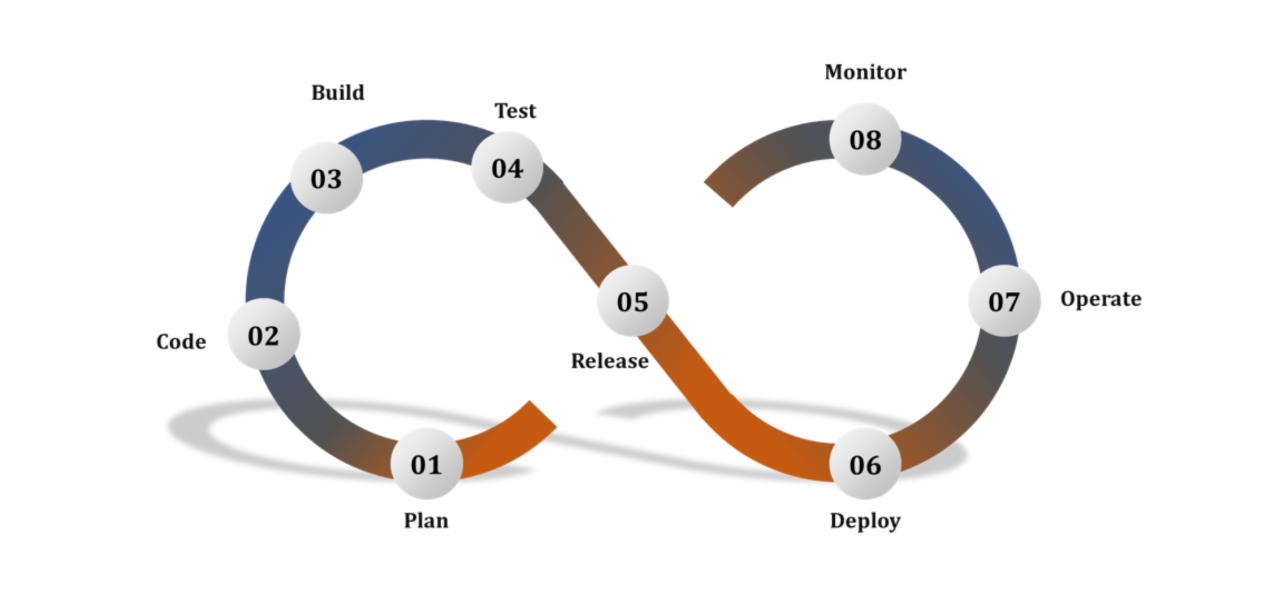
DevOps is a set of cultural practices, philosophies and technical methodologies that aim to enhance collaboration, communication, and integration between development (Dev) and operations (Ops) teams in software development and IT operations. DevOps is driven by the goal of achieving more efficient and reliable software delivery and operation through the entire software development lifecycle.
At its core, DevOps seeks to break down the traditional silos that often exist between development and operations teams. It promotes a collaborative environment where developers and operations personnel work together seamlessly, sharing responsibilities and automating processes to achieve the following objectives:
- Accelerated Delivery
- Higher Quality
- Improved Collaboration
- Increased Efficiency
- Reliability and Stability
- Scalability
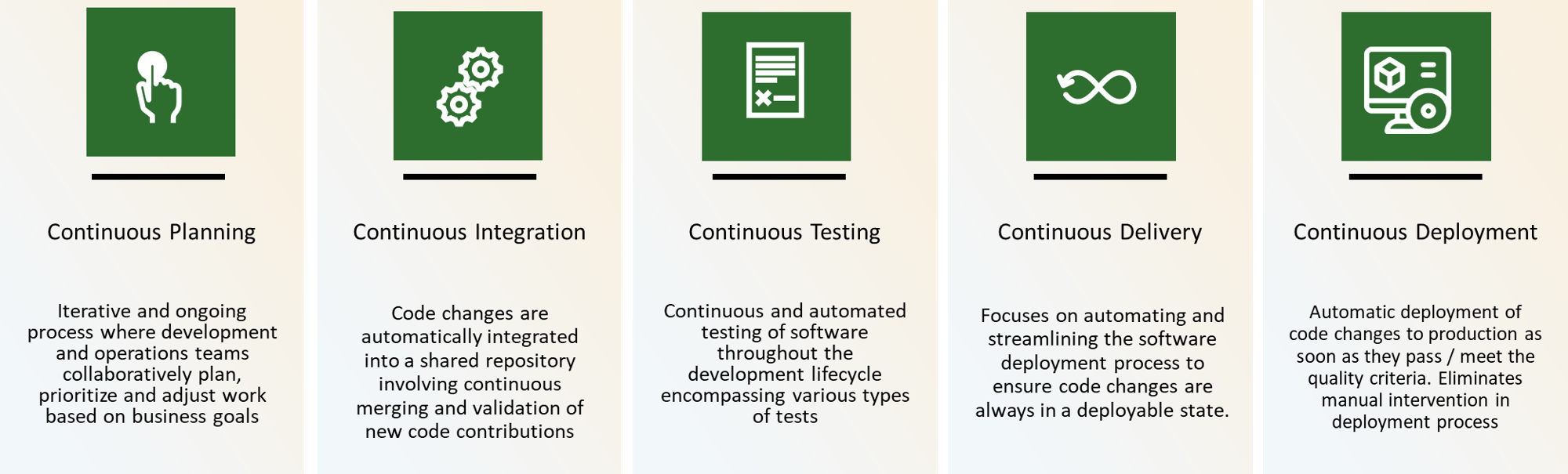
The following are the core practices of DevOps.
01Continuous Planning
Continuous Planning (CP) involves the ongoing and iterative process of defining, prioritizing, and refining requirements and tasks throughout the development lifecycle. It ensures that development teams are aligned with business goals and customer needs. Continuous planning includes:
- Regularly reviewing and adapting project goals and priorities.
- Incorporating feedback from stakeholders to refine and adjust plans.
- Breaking down work into smaller, manageable units for development and delivery.
- Ensuring that plans are flexible and adaptable to changes.
Essentials for Continuous Planning
- Requirement Management
- Backlog Management
- Iterative and Collaborative Planning
- Change Management
Best Practices
- Requirements gathering and refinement.
- Backlog management.
- Iterative planning.
- Collaborative planning.
- Transparent documentation.
- Definition of Done alignment.
- IT architecture standards and compliance adherence.
02Continuous Integration
Continuous Integration (CI) is the practice of frequently integrating code changes from multiple contributors into a shared repository. CI promotes early detection of integration issues and ensures that code changes do not disrupt the development process. Key aspects of Continuous Integration include:
- Developers frequently commit code to a version control repository.
- Automated build and testing processes are triggered after each code commit.
- Integration tests ensure that code changes work together seamlessly.
- Quick feedback loops help identify and resolve issues early in the development cycle.
Essentials for Continuous Integration
- Version Control System
- Clear Branching Strategy
- Automated Build Process
- Automated Code Quality Checks
- CI Pipeline Monitoring
- Versioning and Tagging
Best Practices
- Frequent code commits — encourage developers to commit code changes frequently to the version control repository.
- Small incremental changes are easier to manage and integrate than large or infrequent commits.
- Isolation of environments — use isolated environments for different stages of testing to prevent conflicts leading to inaccuracies.
- Immediate feedback — provide immediate feedback to developers after each code commit.
- Fast feedback helps in identifying issues early in the development cycle.
03Continuous Testing
Continuous Testing (CT) ensures that code changes are thoroughly tested at every stage of the development pipeline. It encompasses various testing types, including unit, integration, regression and performance testing. Continuous testing involves:
- Automated testing at each stage of the development process.
- Rapid feedback on code quality and functionality.
- Early identification of bugs and issues to prevent defects from reaching production.
- Ensuring that testing environments mirror production to replicate real-world conditions.
Essentials for Continuous Testing
- Test Automation Framework
- Test Case Automation for different types of tests
- Test Environment and Test Data / Reference Data management
- Test Result Analysis
Best Practices
- Automated tests should be written for each new feature, improvement or bug fix.
- Orchestrate the execution of automated tests in various testing environments and configurations.
- Generate comprehensive and meaningful test reports.
- Test maintenance — regularly update and maintain automated tests to keep up with changes in the application.
- Shift-left testing — introduce testing early in the development lifecycle.
04Continuous Delivery
Continuous Delivery (CD) focuses on automating the deployment pipeline to consistently deliver working software to a staging environment. This allows for thorough testing and validation before releasing to production. Key components of Continuous Delivery include:
- Automated deployment processes for staging and production environments.
- Consistent deployment artifacts to ensure reproducibility.
- Manual or automated approval gates before moving from staging to production.
- A strong emphasis on always maintaining deployable and production-ready code.
Essentials for Continuous Delivery
- Automated Infrastructure Provisioning
- Automated Build and Packaging
Best Practices
- Promotion gates — implement automated approval gates that ensure code changes meet quality criteria before progressing to the next environment.
- Canary releases — gradually roll out changes to a subset of users and monitor their impact before full release.
- Rollback mechanisms — implement automated rollback mechanisms to quickly revert to a previous version if issues arise.
- Blue-green deployments — automate blue-green deployments to reduce downtime and ensure seamless transitions between old and new versions.
05Continuous Deployment
Continuous Deployment takes Continuous Delivery a step further by automating the release of code changes directly into the production environment without manual intervention. This practice requires a high level of confidence in the automated testing and deployment processes. Continuous Deployment involves:
- Automated deployment of code changes to production once they pass testing.
- Minimized time between code changes and their availability to users.
- Fast feedback loops and a focus on real-time monitoring and rollback mechanisms.
- Striving for high-quality code and comprehensive test coverage to ensure a smooth deployment process.
Essentials for Continuous Deployment
- Deployment Pipeline Automation
- Automated Verification
- Deployment Orchestration
- Automated Monitoring and Alerting
- Auditing and Logging
Best Practices
- Feature flags and rollbacks — utilize feature flags to control visibility of new features and have rollback mechanisms in case of issues.
- Security and compliance — ensure that security and compliance checks are automated and integrated into the deployment pipeline.
- Communications — establish communication channels to inform stakeholders about deployments and changes.
- Release frequency and cadence — determine the appropriate release frequency and cadence based on organizational needs and goals.
- Data management — manage data migrations and updates as part of the deployment process, ensuring data integrity.
06In Summary
DevOps adoption is crucial for modern software projects as it optimizes development, delivery and operations processes, leading to faster, more reliable and higher-quality software releases that better meet the needs of users and the markets.